



In this article — jump to a section
The True Story of Longewala: Fact vs. FictionThe Harrowing Race Against TimeTurning the Tide: Guns Roar to LifeA Shadow in the Darkness: The Turning Point at LongewalaHe was the first and only artillery OP officer at the post.When the Guns RoaredThe Role of the Indian Artillery: A Missing ChapterA Daring Rescue Mission: Snatching a Brother Officer from the Jaws of DeathHigh-Stakes Rescue MissionSecuring Vital SecretsA Triumph of Courage and CamaraderieHelping the NeighbourLongewala and BeyondWelcome to Pakistan: The Harrowing Battle for Survival of 'Romeo' Battery, 185 Light RegimentMunabao: The Last Outpost of Indian Railways on the Pakistan BorderA Swift and Decisive Rescue: Saving Our Men from the Enemy's GraspWhy Set the Record Straight Now? A Story Long OverdueWhy the Battle of Longewala MattersConclusion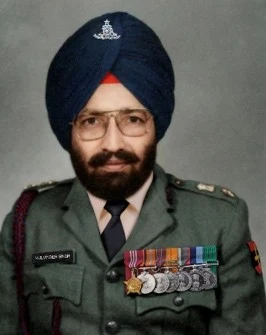
As India celebrates Vijay Diwas, it is time to set the record straight about the true events of the Battle of Longewala.
The desert wind whipped across my face, carrying with it the scent of sand and a faint metallic tang that I knew all too well. It was the smell of war. As the nation prepares to celebrate Vijay Diwas on December 16, commemorating India's remarkable victory in the Indo-Pakistani War of 1971, memories of that night, the night of December 4th, come flooding back. It was a night of terror and uncertainty, a night when the fate of Longewala, and perhaps even Jaisalmer, hung in the balance.
The events that unfolded at this desolate outpost have become legendary, immortalized in Indian cinema by the blockbuster movie Border . But the movie, while stirring patriotic hearts, failed to capture the complete truth. It omitted the crucial role played by the Indian Artillery, the very guns that I commanded, in turning the tide of the battle against a formidable Pakistani armored brigade.
In my recently released book, Guns of Longewala , I seek to set the record straight, to give voice to the unsung heroes who fought with grit and determination in the face of overwhelming odds. It's a story of courage, resilience, and the unwavering spirit of the Indian soldier.
The True Story of Longewala: Fact vs. Fiction
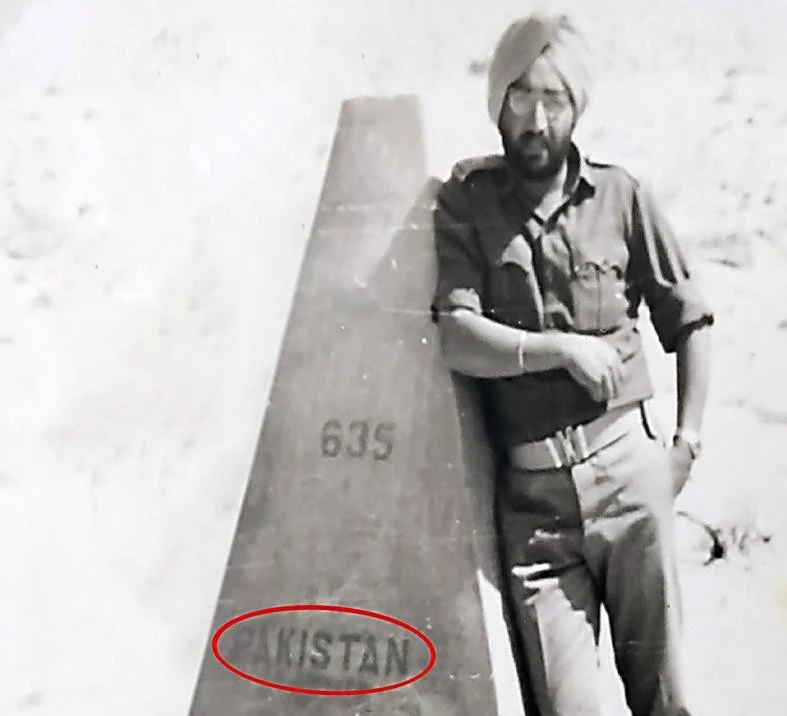
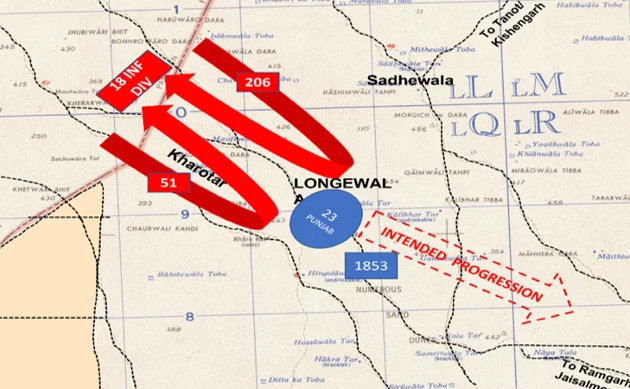
That night, the silence of the desert was shattered by the rumble of approaching tanks. A massive Pakistani armored column, comprising an estimated 45 tanks and mechanized infantry, had crossed Border Pillar (BP) 635 and was advancing towards the Longewala Post. Their objective: to overrun the post by first light and pave the way for a swift advance towards Jaisalmer.
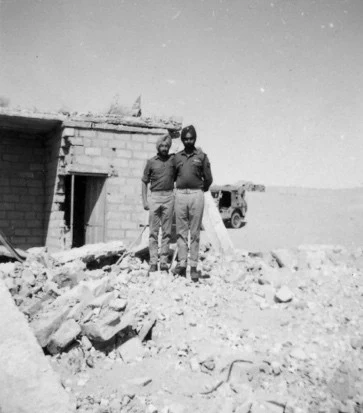
The Longewala Post, manned by a company of the 23rd Punjab Regiment under Major Kuldip Singh Chandpuri, stood isolated and vulnerable in the vast expanse of sand.
As depicted in Border, the Pakistani assault commenced under the cover of darkness. Major Chandpuri and his men fought valiantly, their recoilless rifles spitting fire into the night. But the movie, in its quest for dramatic simplification, neglected to mention the crucial factor that saved the day: the timely intervention of the Indian Artillery.
The battle's crucial turning point arrived with the rapid deployment and firing of the 185th Light Regiment's guns, a lifeline for the besieged infantry company. Pakistani forces, poised to overrun the post, waited for first light to attack. With the Indian Air Force lacking night-flying capability, the defenders faced imminent danger. But just before dawn, the 185th unleashed a devastating barrage. The enemy attack, thrown into chaos, faltered. With their morale shattered, the Pakistanis retreated, soon to face the combined firepower of Indian artillery and the arriving IAF.
The Harrowing Race Against Time
The night was a harrowing blur of urgency and terror. As the battery raced across the dark, desolate terrain,
the commander's jeep suffered a punctured tire on a narrow track. The situation was critical, with no time to lose. Under the ominous canopy of the starless desert night, the commander and his men scrambled to push the immobilized vehicle off the track, their every move accompanied by the haunting echoes of distant gunfire. The sound reverberated through the desert, amplifying the fear that enemy tanks were just metres away, closing in fast.
The battery’s progress became a race against death itself. The pitch-black desert offered no landmarks, and the terrain was an unforgiving maze. Each step forward was taken in suffocating uncertainty, with no guarantee of safety.
On getting closer to the post, we were met by two guides from the 23rd Punjab Battalion. They indicated a suitable gun position behind the post and led Captain Datta, the OP Officer, to the top. The artillery battery worked in utter darkness, the palpable threat of discovery hanging over them like a guillotine. The stakes were monumental – any delay or miscalculation could have doomed them all.
The Pakistani tanks were perilously close. The rumble of their engines grew louder, their turret-mounted guns sweeping the shadows for signs of movement. Had the enemy tank commanders realized the artillery was setting up within striking range, their tanks would have unleashed devastating firepower on the vulnerable gunners. The still-deploying mortars would have been annihilated within minutes, the position overrun, and Longewala left defenseless against the armored onslaught.
The consequences would have been apocalyptic: the fall of the post and the enemy’s unimpeded advance towards Jaisalmer.
The tension was suffocating, the air thick with the fear of imminent annihilation. Major Kulvinder Singh,
the Battery Commander, orchestrated the deployment with steely precision, knowing that every passing second could bring disaster. His men moved like ghosts, their actions guided by experience, instinct, and an unyielding determination to succeed. The gunners, drenched in sweat and fueled by adrenaline, worked in silence, their every movement a gamble against the Pakistani tanks lurking in the shadows.
The desert was alive with terror, every sound amplified by the oppressive darkness. Yet amidst this nightmare, the battery held its nerve, inching towards readiness. Their survival – and the fate of the battle – depended on their ability to turn this moment of impending doom into a decisive triumph.
Turning the Tide: Guns Roar to Life
Just before dawn, with enemy tanks lurking nearby, we managed to deploy our guns behind the Longewala Post. The darkness was our only ally, concealing us from the enemy's prying eyes. Lieutenant Balasubramaniam, our Gun Position Officer, took command well before the first rays of light began to paint the horizon. With nerves of steel, he directed the gunners as they prepared the mortars for firing.
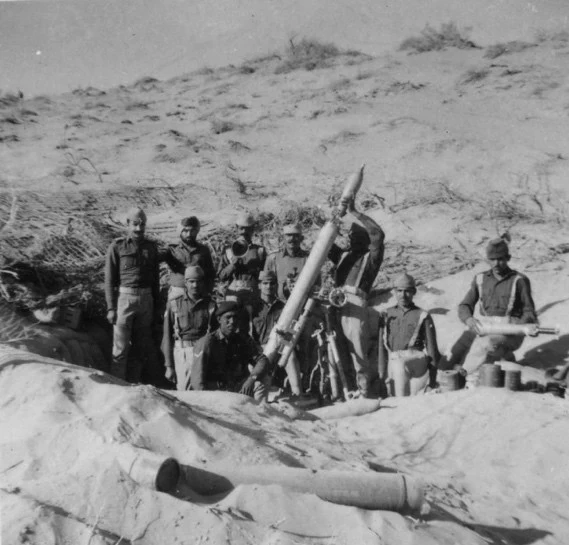
"All guns ready," Balasubramaniam's voice crackled over the radio, calm and steady. "Fire!"
The silence of the desert was shattered by the ear-splitting roar of our guns. The first shells screamed through the air, exploding amongst the assaulting Pakistani forces. The enemy, expecting to face only lightly armed infantry, was caught completely off guard. Tanks erupted in flames, their crews screaming as they were engulfed in fire. Infantrymen, caught in the open, scattered in panic.
In war, every second counts. The artillery shells landed on the Pakistani forces as they were in assault formation, ready to capture the post. The sudden and unexpected artillery bombardment caught the Pakistanis completely off guard. They scrambled for cover, but there was none. Their only option was to run backwards to get out of the artillery range, which they did.
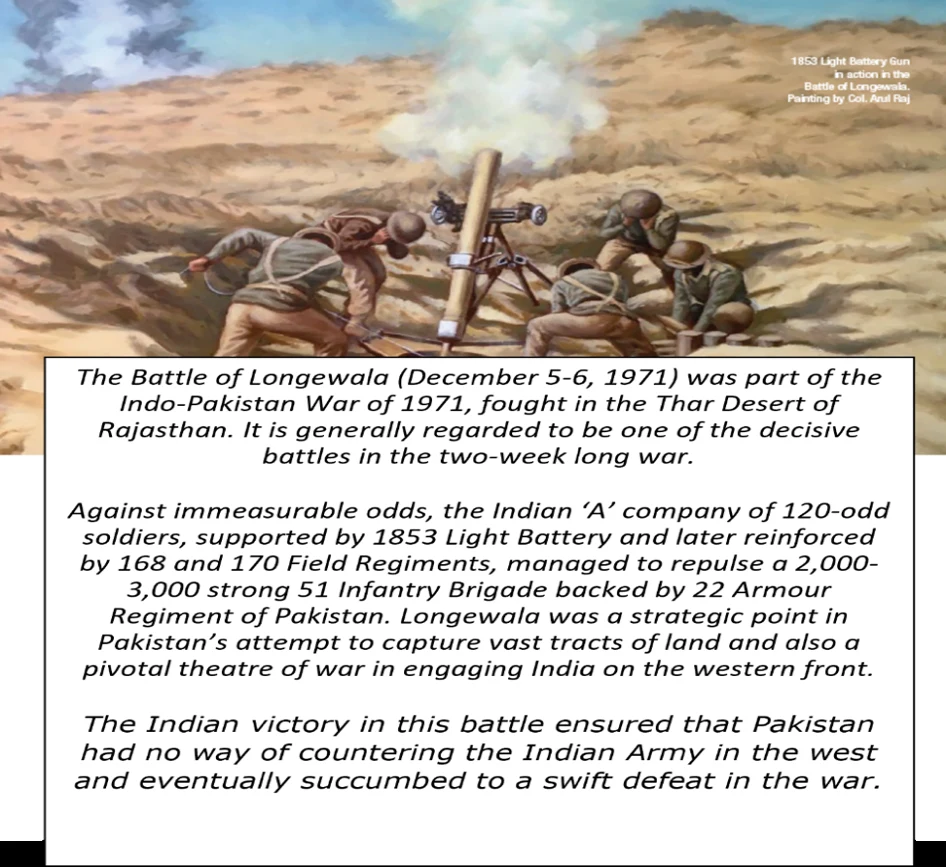
By the time the Indian Air Force (IAF) arrived at about 7:30 a.m., the backbone of the Pakistani forces was already broken by the Indian Artillery. The battlefield was littered with burning tanks and the bodies of fallen Pakistani soldiers.
The combined might of the artillery and the IAF proved too much for the enemy. Their attack faltered, then collapsed. Tanks that had moments before been symbols of power and aggression now lay smoldering wrecks. The desert sand, once pristine, was stained with oil and blood.
Our guns continued to fire, their muzzle flashes illuminating the night. I knew we were vulnerable to counter-attack. The Pakistani forces, having been bloodied while assaulting the Longewala Post, could turn around in a desperate move and come behind the post to overrun the gun position. This threat was real, and the rumbling of Pakistani tanks was getting louder. "Captain Kapoor," I yelled over the din, "fortify the gun position! We need anti-tank defenses now!"
Captain Kapoor, a young officer with a cool head and a fearless heart, sprang into action.
He rallied his men, and within minutes, they had established a defensive perimeter around our position. He stood vigil throughout the battle, ensuring that our guns could continue their devastating work uninterrupted.
A Shadow in the Darkness: The Turning Point at Longewala
While the guns were being prepared for action, Captain Santosh Datta, our Observation Post Officer, was making his way through the treacherous track towards the besieged outpost. Guided by two brave soldiers from the 23rd Punjab, he moved like a wraith through the inky blackness, enemy bullets snapping and crackling past him. "Keep your head down, Sahib!" one of the guides hissed, his voice a mere whisper against the cacophony of gunfire.
Reaching the post was a miracle in itself. Captain Datta, breathless, his uniform caked with sweat and sand, stumbled into the chaos and found Major Chandpuri. The Major, his face grimy, his beard unkempt, looked up in astonishment. "An artillery officer? Here?" Hope flickered in his exhausted eyes. "You're a godsend!"
He embraced Datta in a bear hug, the desperation of their situation momentarily forgotten in a surge of relief.
With the fate of the battle resting on his shoulders, Datta swiftly calculated his firing coordinates. The first shell screamed into the night, exploding in the distance. Too far. He adjusted his aim, bringing the next round closer, his senses honed by years of training and the urgency of the moment. And then, with chilling precision, he unleashed a storm of fire upon the enemy.
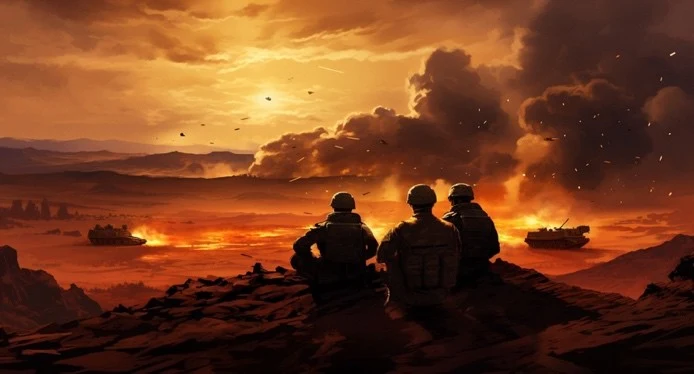
He was the first and only artillery OP officer at the post.
The Pakistani tanks, which had been poised to overrun the post, were now caught in a deadly crossfire. Had they discovered our guns earlier, we would have been sitting ducks. But Datta's courage and expertise had snatched victory from the jaws of defeat.
When the Guns Roared
The sound of our guns was a lifeline to the beleaguered infantrymen at Longewala. Naik Singh, a young soldier from the 23rd Punjab, later recounted, "Sahib, when we heard those first shells exploding, it was as if the gods themselves had descended from the heavens to fight alongside us."
The Pakistani forces, once so confident of victory, were now reeling in confusion and disarray. Their attack, which had seemed unstoppable, crumbled under the relentless barrage of artillery fire. Their dreams of conquest lay shattered, consumed by the flames of our guns. The 185 Light Regiment had saved Longewala.
The Role of the Indian Artillery: A Missing Chapter
The movie Border, while capturing the bravery of the infantry and the IAF, failed to acknowledge the crucial role played by the Indian Artillery. It's a historical oversight that I aim to correct.
Our guns not only halted the Pakistani advance but also inflicted heavy casualties, disrupting their plans and buying precious time for the IAF to arrive. It was a team effort, a symphony of destruction orchestrated by the different branches of the Indian Armed Forces.
A Daring Rescue Mission: Snatching a Brother Officer from the Jaws of Death
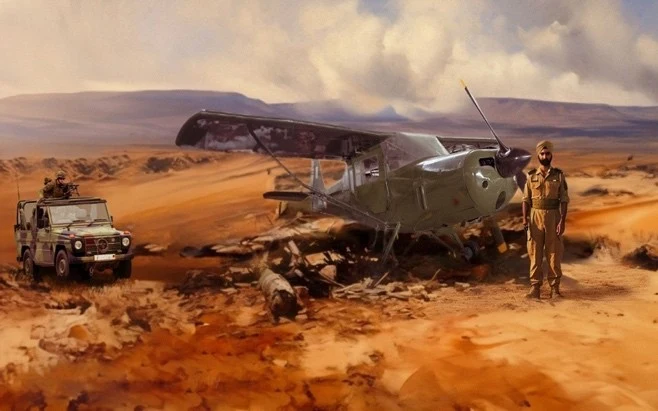
The Battle of Longewala raged around us, a maelstrom of fire and fury. Pakistani tanks, like steel predators, prowled the battlefield, their guns spitting death. Amidst this chaos, a desperate drama unfolded, a story of courage and camaraderie that would forever be etched in the annals of the Indian Army. Major (later Major General) Atma Singh, VrC, in his Air Observation Post (AOP) aircraft, was our lifeline. Soaring above the carnage, he guided our artillery fire, directing IAF pilots onto hidden enemy positions, his voice a beacon of calm amidst the storm. However, around 3 p.m. on 5 December 1971, fate dealt a cruel blow. His aircraft, crippled by mechanical failure or perhaps enemy fire – the truth lost to the chaos of battle – plummeted from the sky, crash-landing perilously close to the advancing Pakistani forces.
The pilot, along with his aircraft's sensitive equipment, was now in grave danger of falling into enemy hands. The thought was unbearable. Leaving a comrade to such a fate was simply not an option. With a heavy heart but a resolute spirit, I, Major Kulvinder Singh, Battery Commander of the 185 Light Regiment, knew I had to act swiftly. A daring rescue mission was the only answer.
High-Stakes Rescue Mission
The battlefield was a living inferno, a deadly dance of explosions and gunfire. Extracting Major Atma Singh from the wreckage was a gamble, a desperate race against time. We devised a plan, a bold and audacious scheme that relied on courage, cunning, and a heavy dose of luck.
Under the cover of darkness, a small team of our bravest soldiers, handpicked for their skill and determination, set out towards the crash site. To shield them from the enemy's prying eyes, we unleashed a relentless artillery barrage, creating a protective curtain of fire around the downed aircraft. The desert was illuminated by the blinding flashes of exploding shells, the air thick with the acrid smell of cordite.
Navigating through treacherous terrain, dodging enemy patrols and braving a hail of bullets, the rescue team finally reached the wreckage. With hearts pounding and adrenaline surging, they extracted Major Atma Singh from the mangled remains of his aircraft.
Securing Vital Secrets
The downed AOP aircraft was a treasure trove of sensitive information that could not be allowed to fall into enemy hands. Time was of the essence. Working with feverish urgency, the rescue team ensured that all critical equipment and documents were secured, denying the enemy any potential intelligence advantage.
A Triumph of Courage and Camaraderie
Against all odds, the mission was a resounding success. Major Atma Singh was safely brought back to Brigade Headquarters, where he was debriefed by Brigadier E.N. Ramadoss of the 30 Infantry Brigade. The operation was a testament to the bravery, quick thinking, and unwavering commitment of the Indian Armed Forces. We had not only saved a valuable comrade but also denied the enemy a crucial opportunity.
This daring rescue, executed under the most perilous of circumstances, remains a testament to the indomitable spirit of the Indian soldier. It is a story of valour, ingenuity, and the unwavering bond of brotherhood that defines our armed forces.
Helping the Neighbour
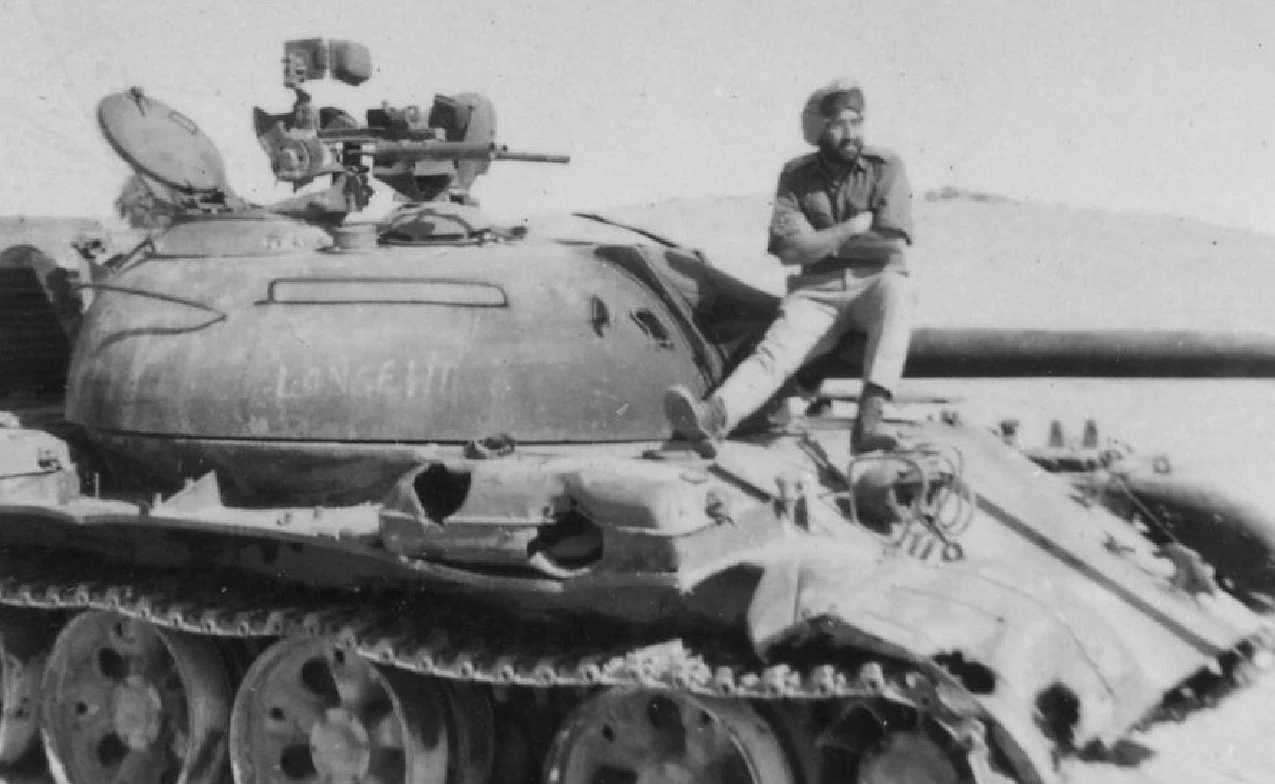
With the Battle of Longewala decisively won and the Pakistani forces pushed back, the focus shifted to the Barmer sector, where 11 Infantry Division was advancing deeper into enemy territory. The victorious troops of 167 Field Artillery Regiment and 1853 Light Battery were tasked with new assignments to reinforce this offensive. Among them, 1853 Light Battery was handpicked by the Commanding Officer for a critical assignment at the Longewala Gun Position – a testament to their extraordinary performance during the battle.
The trust placed in 1853 Light Battery filled our hearts with immense pride and honour. Our dedication and valour in the field had earned us this distinction. Moreover, we were further affiliated with the distinguished 167 Field Regiment, commanded by Lieutenant Colonel (later Lieutenant General) TP Singh. As part of the 322 Infantry Brigade, we were tasked with a momentous mission: to reinforce the advancing 11 Infantry Division, now driving into Pakistani territory with renewed vigour.
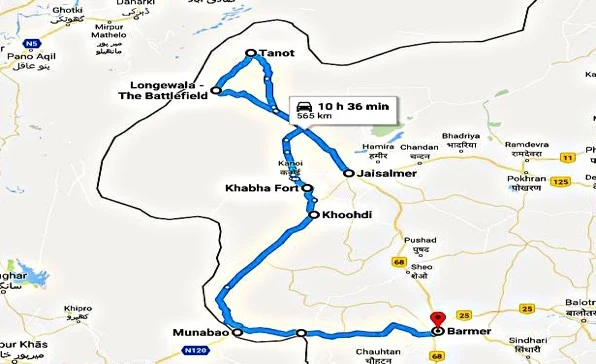
This assignment was more than just a routine order; it was a recognition of the steadfast determination and combat prowess our unit had displayed during the Battle of Longewala. Our successes on the battlefield had established us as a critical asset, and our superiors placed unwavering trust in our ability to deliver under the most challenging conditions.
The honour of this new role underscored the cohesion and dedication of our unit. The bond that united us—built on shared purpose, resilience, and an unyielding determination to succeed—had not gone unnoticed. It was this unity that had seen us through the chaos and terror of Longewala, and it was this unity that would carry us forward.
As we advanced to support the 11 Infantry Division, we were acutely aware of the formidable challenges that lay ahead. Yet, we embraced them with the same unshakeable spirit that had guided us through every battle. To serve, to protect, and to fight alongside the finest soldiers of the Indian Army was not just a duty but a profound privilege.
For us, there was no greater honour than safeguarding our nation and upholding the storied traditions of valour and sacrifice. Whether at Longewala or in the depths of enemy territory, our commitment remained resolute: to defend our homeland with unwavering courage, to stand as a force to be reckoned with, and to uphold the legacy of the Guns of Longewala.
Longewala and Beyond
Welcome to Pakistan: The Harrowing Battle for Survival of 'Romeo' Battery, 185 Light Regiment
As 'Romeo' Battery of the 185 Light Regiment crossed the international border into Pakistan during the 1971 Indo-Pak War, the air was thick with tension and uncertainty. This was uncharted territory, where every movement carried the risk of exposure, and every decision could mean the difference between life and death. For these brave soldiers, the mission would test their resolve and courage in ways they had never imagined, placing them in the path of relentless enemy action and unimaginable challenges.
Munabao: The Last Outpost of Indian Railways on the Pakistan Border
The first wave of danger came swiftly from above. Almost immediately after crossing into Pakistani territory, the convoy was detected by enemy jets. These sleek, menacing aircraft swooped low over the desert, unleashing a torrent of gunfire and bombs upon the vulnerable Gun convoy. The artillerymen found themselves in a desperate race for survival, exposed in the open desert with no cover to shield them from the onslaught. The enemy’s objective was unmistakable: to neutralize the battery before it could establish its position and bring its firepower to bear.
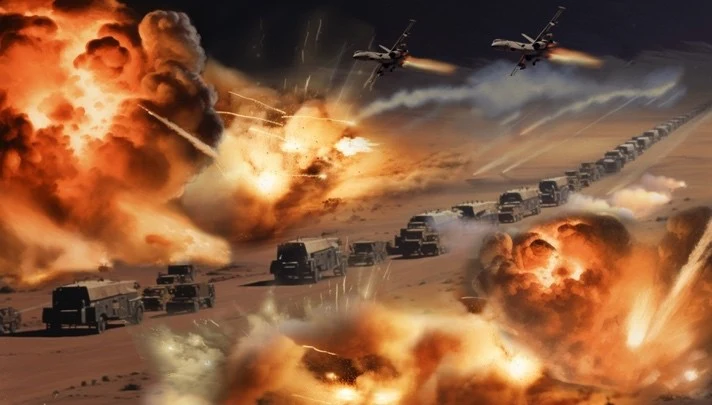
Amidst the chaos and destruction, the soldiers of 'Romeo' Battery demonstrated remarkable composure. Driving their vehicles at breakneck speed, they maneuvered through the treacherous desert terrain, dispersing strategically to minimize losses while keeping the convoy moving. The deafening explosions of bombs and the crack of strafing bullets filled the air, yet the Gunners remained resolute, their focus unbroken.
When the enemy jets finally peeled away, their attacks temporarily abated, the soldiers seized the opportunity to assess the situation. Damaged vehicles and the loss of precious time weighed heavily on them, but their fighting spirit remained intact. The battery was still operational. With unwavering determination, they pressed forward, knowing that any delay could jeopardies the mission and provide the enemy with an upper hand.
The journey deeper into Pakistani territory was fraught with peril. Every mile presented fresh dangers, from the ever-present threat of landmines to potential ambushes by enemy troops. Communication was sparse, and the men relied on their training, discipline, and the steadfast leadership of their officers to navigate these trials. Each decision was critical, and there was no room for error.
As they neared their designated position, the soldiers of 'Romeo' Battery recognized the magnitude of what they had already accomplished. Surviving the relentless aerial assault was no small feat, but their mission was far from over. They understood the stakes: establishing a forward artillery position that would deliver decisive blows to the enemy and provide essential support to the advancing Indian forces.
The harrowing journey of 'Romeo' Battery stands as a testament to the courage, resilience, and indomitable spirit of the Indian soldier. Despite the relentless pursuit by enemy forces, these men remained steadfast in their duty, ensuring that their guns would be ready to roar to life when the moment came. Their survival in the face of overwhelming odds was not only a tactical triumph but also a story of extraordinary human grit and resolve.
A Swift and Decisive Rescue: Saving Our Men from the Enemy's Grasp
The ceasefire was supposed to bring a fragile peace to the battlefield, a brief respite from the relentless carnage. But the echoes of war still reverberated through the no-man's-land, a treacherous expanse where danger lurked in every shadow. An Indian infantry patrol, venturing into this perilous zone, suddenly found themselves trapped, pinned down by a hail of enemy fire.
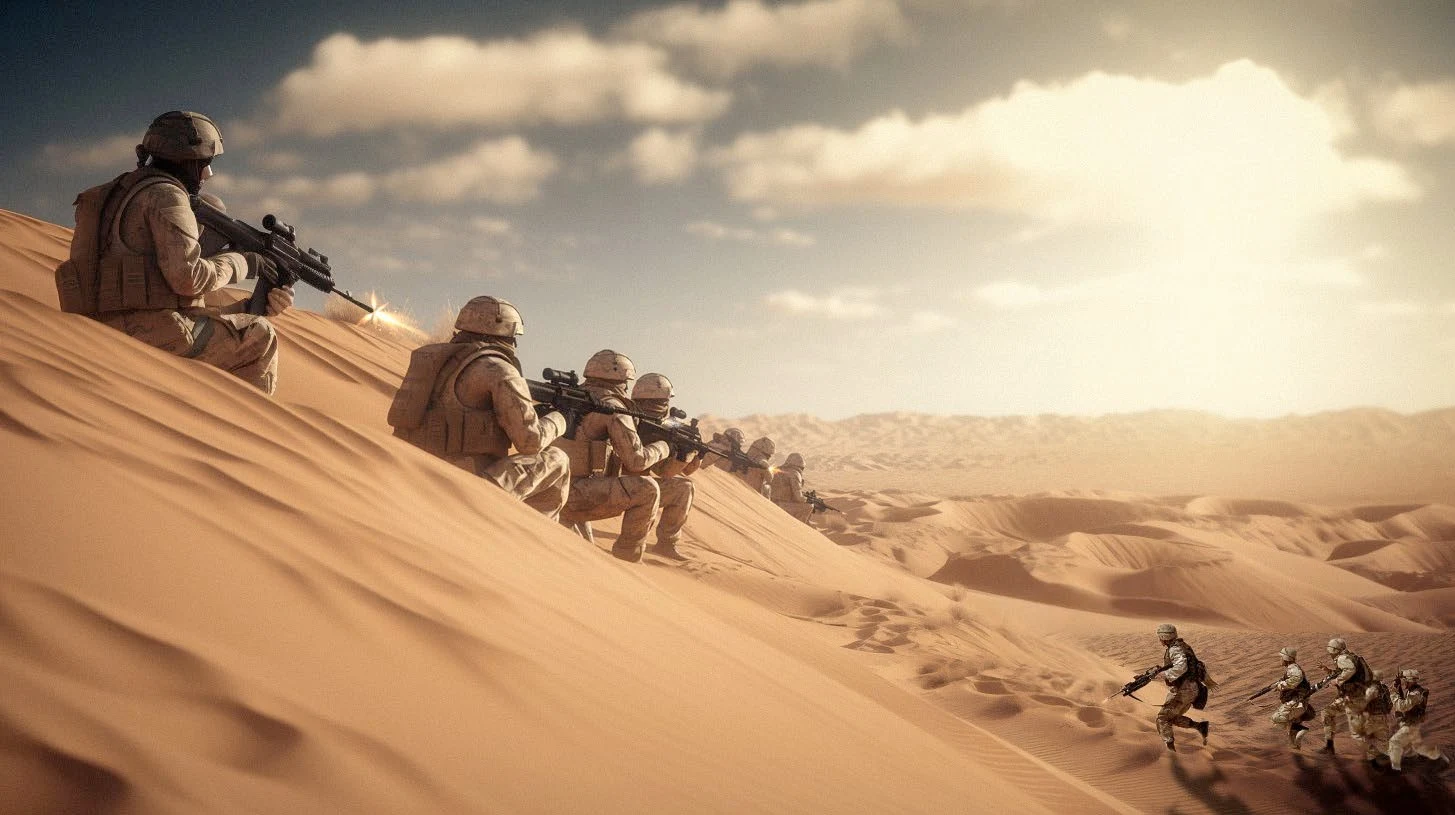
The situation was desperate. Our men were exposed, vulnerable, their lives hanging in the balance. There was no time for hesitation, no room for doubt. As Battery Commander, the
responsibility fell upon me. With a surge of adrenaline and a fervent prayer, I made a split-second decision, a gamble to save the lives of my comrades.
"Bring down artillery fire!" I roared, my voice cutting through the tension. "Target the enemy positions! Extricate our men!"
The order was met with a surge of action. Our gunners, their faces grim but their resolve unwavering, sprang into action. The desert air was once again filled with the thunderous roar of our artillery, the ground trembling beneath the barrage. Shells screamed towards the enemy, exploding with devastating force, suppressing their fire and forcing them to scatter.
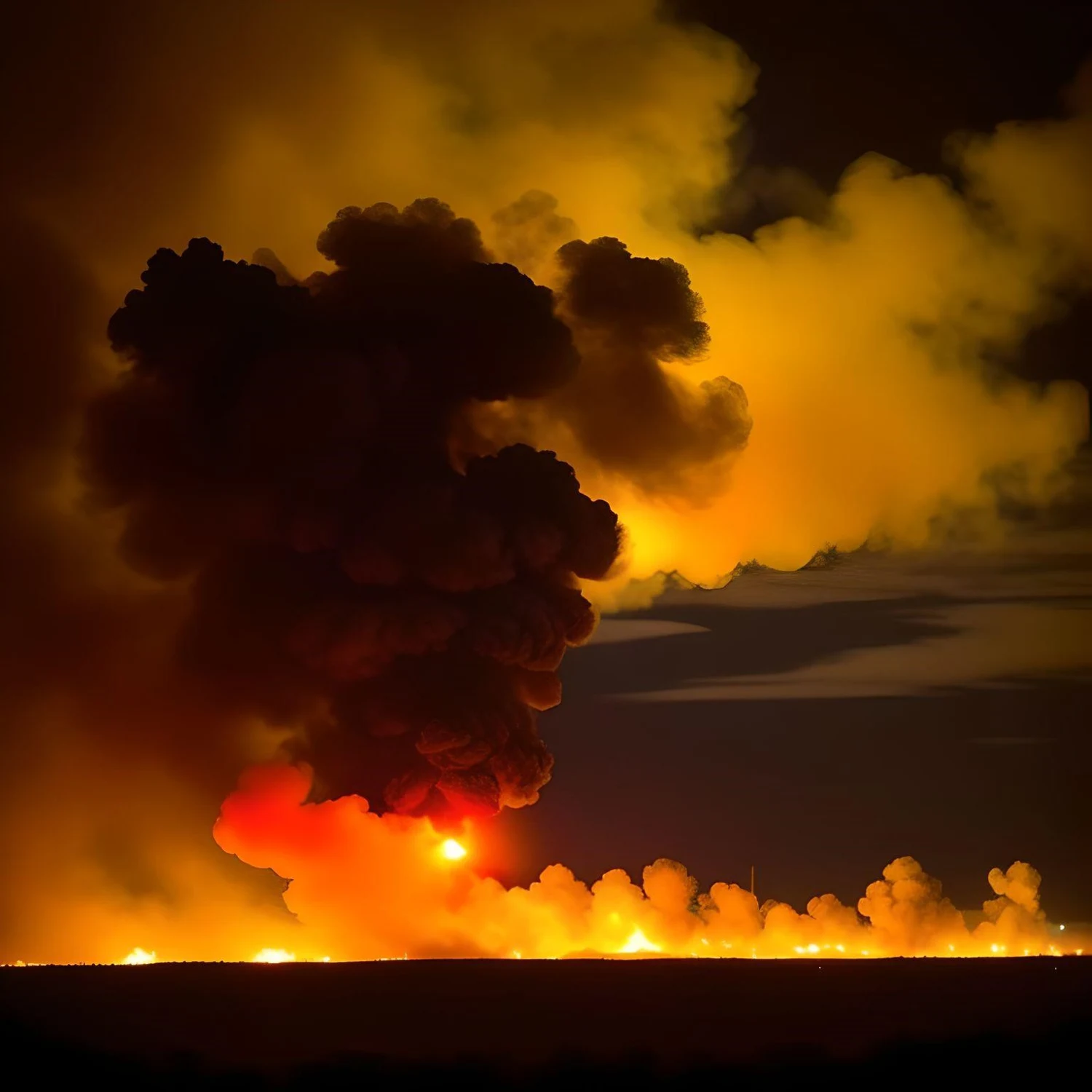
Under the cover of this fiery curtain, our trapped infantrymen, their hearts pounding with a mix of fear and gratitude, made their escape. They dashed back to our lines, breathless but alive, thanks to the swift and decisive action of the artillery.
This daring rescue, a testament to the quick thinking and unwavering camaraderie of the Indian Army, was a victory snatched from the jaws of potential tragedy. It was a reminder that even in the chaos of war, the bonds of brotherhood and the unwavering commitment to protect our own remain paramount.
Why Set the Record Straight Now? A Story Long Overdue
It has taken decades to bring the full story of Longewala to light, a story that acknowledges the crucial role played by the Indian Artillery. This delay, while regrettable, is not without precedent in the annals of military history. Often, the fog of war, the urgency of moving on to the next battle, and the complexities of record-keeping can obscure the contributions of certain units or individuals.
In the aftermath of Longewala, the gunners of the 185 Light Regiment were immediately reassigned to support operations in the Barmer Sector, far from the scene of their triumph. By the time we returned, the official war diaries had been written, and the narrative of the battle had solidified, focusing primarily on the heroic stand of the infantry and the decisive intervention of the Indian Air Force. Our contribution, while pivotal, faded into the background.
The release of the movie Border further cemented this incomplete narrative. While the film deservedly celebrated the bravery of the infantry and the IAF, it omitted the artillery's role, perhaps as a dramatic device to heighten the sense of isolation and vulnerability faced by the soldiers at the Longewala Post.
This omission is not unique to Longewala. History, even military history, is often shaped by narratives that emphasize certain aspects while downplaying others. The Charge of the Light Brigade, immortalized by Tennyson's poem, is remembered for the valor of the cavalrymen but often overlooks the crucial role of the artillery in the Crimean War. Similarly, the heroic defense of Saragarhi in 1897, while celebrated for the Sikh soldiers' last stand, sometimes overshadows the broader context of the Tirah Campaign and the contributions of other units.
At Longewala, the 12th Infantry Division, tasked with capturing Rahim Yar Khan, was caught off guard by the Pakistani attack. Like a hunter surprised by its prey, the division found itself vulnerable to an assault from the rear. It was the rapid deployment of the 185 Light Regiment that halted the Pakistani advance and bought precious time for the IAF to intervene.
Yet, in the aftermath, there was a reluctance to discuss the battle, perhaps due to the embarrassment of the initial surprise. Even when I was posted as a Brigade Major in 1974, the battle remained a sensitive topic. It was only after the release of Border that the conversation shifted, and my photographs from the battle were used in a documentary, albeit without acknowledging my regiment. This spurred me to write to various officers, seeking recognition for the artillery's contribution, but my efforts were met with silence.
With the publication of Guns of Longewala , I aim to rectify this historical oversight. This book is not just a personal memoir; it is a tribute to the unsung heroes of the Indian Artillery who played a decisive role in one of the most crucial battles of the 1971 war. It is a testament to the importance of teamwork, coordination, and the seamless integration of all branches of the armed forces in achieving victory.
Why the Battle of Longewala Matters
The Battle of Longewala is a shining example of how determination, strategy, and courage can overcome even the most overwhelming odds. It demonstrates the importance of every element of the armed forces working in unison – from the infantry to the artillery to the air force.
For the Indian Artillery, Longewala was a defining moment. It showcased the effectiveness of heavy mortars in desert warfare and the unwavering commitment of the gunners who operated under extreme conditions. The victory at Longewala was not just a tactical triumph but a testament to the indomitable spirit of the Indian soldier.
Conclusion
As we celebrate Vijay Diwas, let us remember the complete story of Longewala. Let us honour the infantrymen who held the line, the air warriors who delivered precision strikes, and the gunners who brought the thunder of artillery to the battlefield.
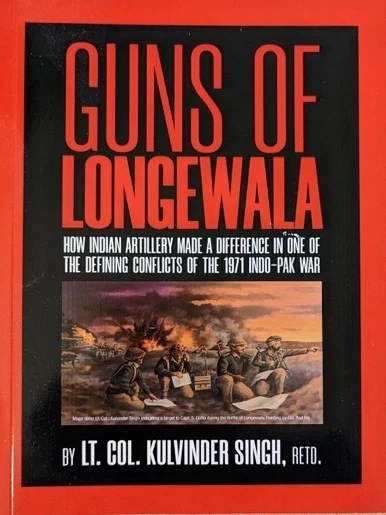
Guns of Longewala
is more than a book – it is a call to recognize the contributions of every soldier who played a role in this historic victory. It is a reminder that history must be truthful and inclusive, acknowledging all who stood tall in the face of adversity.
About the Author – Lt Col Kulvinder Singh (Retd.) is the author of
English: Guns of Longewala
Hindi: Longewala Ki Garajti Topen,
a comprehensive account of the Battle of Longewala, highlighting the crucial role of the Indian Artillery in one of the most decisive battles of the Indo-Pakistani War of 1971.
(The book is available on Amazon and at Sabre & Quill.)